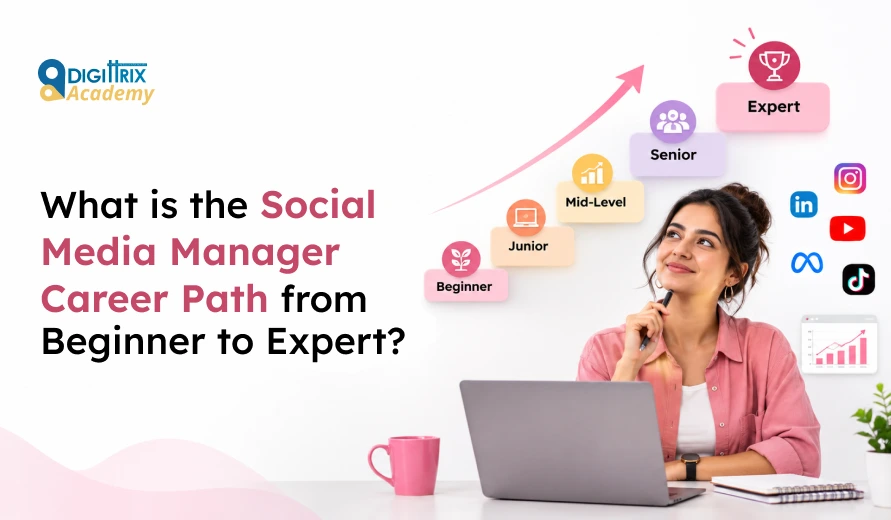
Short answer: The social media manager career path typically progresses from intern or executive to specialist, then to manager, then to senior lead or head, and finally to director, consultant, or agency owner. Reaching expert level takes several years of managing real accounts. The pace depends on the results you deliver, the size of the accounts you manage, and the skills you develop along the way.
What Does a Social Media Manager Do?
A social media manager plans, publishes, and reviews content for a brand across platforms such as Instagram, LinkedIn, Facebook, YouTube, and X. The role also includes replying to comments and messages, tracking reports, running paid posts, and collaborating with design, sales, and customer support teams. Anyone planning a social media manager career path should start by understanding the day-to-day work.
In India, many brands also use WhatsApp Business and create content in regional languages. A manager therefore often manages multiple audiences simultaneously, such as customers in Delhi and Chandigarh who prefer Hindi or Punjabi posts, and buyers elsewhere who prefer English.
Want to build practical digital marketing skills? Check Digittrix Academy's Digital Marketing Course to gain hands-on experience and industry-relevant knowledge!
Social Media Manager Career Path at a Glance
The table below lists the main social media manager job roles at each stage.
|
Stage |
Common job titles |
Typical experience |
Main focus |
|
Beginner |
Intern, Trainee, Social Media Executive |
0 to 1 year |
Posting, scheduling, daily tracking |
|
Junior |
Social Media Specialist, Content Executive |
1 to 3 years |
Owning one or two accounts, monthly reports |
|
Manager |
Social Media Manager |
3 to 5 years |
Strategy, budget, team coordination |
|
Senior |
Senior Manager, Social Media Lead, Head of Social |
5 to 8 years |
Many brands, hiring, link to sales |
|
Expert |
Director, Consultant, Agency Founder |
8+ years |
Business results, advice, leadership |
These timelines are common patterns, not fixed rules. A person who manages larger accounts and demonstrates clear results can move faster than someone who stays on one small page for years.
Stage 1: Social Media Management Career for Beginners (Intern or Executive)
At this stage, you handle the daily work that keeps accounts active. Your seniors provide the plan, and you carry it out.
Typical tasks:
- Scheduling posts using the content calendar
- Making simple graphics in Canva or editing short videos in CapCut
- Replying to comments and direct messages
- Noting daily numbers such as reach, likes, saves, and followers
- Researching hashtags, trends, and competitor pages
Skills to build:
- Writing short, clear captions
- Knowing the right image and video size for each platform
- Reading the basic reports inside Meta Business Suite and YouTube Studio
- Spelling, grammar, and brand tone
How to get your first role: A social media management career for beginners often starts with your own page on a topic you know, or with running the page of a local shop, a college club, or a family business. Even three months of consistent posting with saved numbers gives you something tangible to show an employer. Many beginners focus on follower count, but hiring managers care more about reach, saves, clicks, and inquiries.
Stage 2: Junior Level (Social Media Specialist)
After one to three years, you stop merely following instructions and start owning parts of the plan. You handle one or two accounts and explain why a post worked or failed. This stage supports your social media manager career growth because the accounts you own now become the results you showcase later.
Typical tasks:
- Building a monthly content calendar
- Writing briefs for designers and video editors
- Running small paid campaigns in Meta Ads Manager
- Preparing monthly reports for your manager or client
- Testing post formats such as reels, carousels, and stories
Skills to build:
- Basic paid social: audience setup, budget, and reading cost per lead
- Reading numbers such as click-through rate, reach, and saves per post
- Handling negative comments calmly
- Working with deadlines across several people
This is the stage where many people pick a first area of interest. Some like writing, some like video, and some like numbers and ads. Notice which one you enjoy, because it will shape your later choices.
Stage 3: Social Media Manager
With three to five years of experience, you become responsible for the full social media plan of a brand. You decide what to post, where to post, how much to spend, and how to measure success. This is where the full set of social media manager skills and responsibilities comes together.
Typical tasks:
- Setting monthly and quarterly goals with the marketing head or client
- Planning the budget for ads, tools, and influencers
- Leading a small team of two to four people
- Handling complaints and public comments that could harm the brand
- Presenting results to owners, directors, or clients
Skills to build:
- Strategy writing: audience, goals, platforms, content types, and measurement
- Budget planning and cost tracking
- Clear communication with non-marketing people, such as founders and finance teams
- Community management, meaning building a steady relationship with followers
- Influencer coordination, including briefs, approvals, and payment terms
At this level, a good manager connects social media work to business goals. A post that earned many likes but no enquiries is not a win for a company that needs sales.
Stage 4: Senior Manager, Lead, or Head of Social
After five to eight years, your work shifts from completing tasks to building systems. You may oversee several brands or lead the entire social function within a company or agency.
Typical tasks:
- Hiring and training team members
- Setting approval steps so posts go live without mistakes
- Linking social media numbers to leads, sales, and customer cost
- Negotiating contracts with influencers, creators, and tool vendors
- Preparing a crisis plan for situations such as a viral complaint
Skills to build:
-
People management and feedback
-
Process writing, so the team works the same way every time
-
Reading business reports, not only social reports
-
Understanding platform rules, advertising policies, and data privacy basics
Stage 5: Expert (Director, Consultant, or Founder)
Expert level is less about a title and more about trust. People come to you because your decisions have repeatedly worked and you can explain the reasons clearly.
Common expert-level social media manager job roles:
- Director or Head of Digital: You guide social media, search, email, and paid ads under one plan.
- Independent consultant: You advise several brands on strategy, audits, and team training.
- Agency founder: You build a team and serve clients across industries.
- Niche specialist: You become the person known for one area, such as paid social, B2B LinkedIn, social commerce, or short video.
Signs of expert level:
- Your results stay steady across different brands and seasons.
- You can explain what you did, why you did it, and what the numbers showed.
- You have trained others who now do well in their own roles.
- You can say “no” to ideas that carry brand or legal risk.
Social Media Manager Skills and Responsibilities at Each Level
|
Skill |
Beginner |
Junior |
Manager |
Senior and Expert |
|
Writing captions |
Core |
Core |
Review |
Set tone and standards |
|
Design and video basics |
Core |
Useful |
Brief others |
Guide direction |
|
Reporting |
Collect numbers |
Explain numbers |
Present to clients |
Link to revenue |
|
Paid social |
Awareness |
Run small budgets |
Plan and approve |
Set channel mix |
|
Team handling |
None |
Assist |
Lead a few people |
Hire and train |
|
Strategy |
Follow |
Suggest |
Write and own |
Guide several brands |
Tools Used Along the Social Media Manager Career Path
You do not need every tool on day one. Add them as your role grows.
- Meta Business Suite and Ads Manager: Posting, messages, and paid campaigns on Facebook and Instagram
- LinkedIn Page analytics and Campaign Manager: Company page reports and B2B ads
- YouTube Studio: Video performance and audience data
- Google Analytics 4: Seeing how many website visits and enquiries come from social posts
- Canva and CapCut: Quick graphics and short video editing
- Buffer, Hootsuite, or Sprout Social: Scheduling and team approval
- Trello or Notion: Content calendars and task tracking
- Looker Studio: Simple dashboards that combine several data sources
Official help pages from Meta, Google, and LinkedIn are the safest place to check how a tool works because platforms frequently change their menus and rules.
How to Become a Social Media Manager: Build Proof of Your Skills
Employers and clients look for evidence, not only certificates. Courses like Meta Blueprint and Google Skillshop help, but they work best alongside real results. If you are wondering how to become a social media manager, a clear portfolio is the strongest first step.
Build a simple portfolio with:
- 3 to 5 case studies, each showing the starting point, what you did, and what changed
- Screenshots of reports you personally handled, with brand names hidden if you lack permission
- Examples of captions, reels, carousels, and one full monthly calendar
- A short note on what you would do differently
Only claim results you can prove. If you worked on a team, specify which part was yours. Honest case studies build more trust than large claims, and a hiring manager can easily verify them with a short call.
Agency, In-House, or Freelance: Which Route Fits Your Social Media Manager Career Path?
|
Route |
What you gain |
What to watch |
|
Agency |
Many brands and industries in a short time, fast skill growth |
Long hours, client pressure, frequent changes |
|
In-house |
Deep knowledge of one brand, steady routine |
Fewer chances to try different industries |
|
Freelance |
Control over clients and income |
Uneven income, you handle sales and billing yourself |
Many people start at an agency for two to three years, move in-house or into a lead role, and then begin consulting once they have a client network.
Social Media Manager Salary in India
Social media manager salaries in India vary by city, industry, company size, and performance. Before negotiating, check current job listings in your city and compare roles with similar responsibilities.
Want to gain real-world marketing experience before starting your career? Check Digittrix Academy's Digital Marketing Course with Internship to develop practical skills and workplace experience!
Common Mistakes That Slow Social Media Manager Career Growth
- Chasing followers instead of outcomes. Leads, sales, and saves matter more to a business.
- Staying on one platform. Know how Instagram, LinkedIn, and YouTube differ.
- Skipping the numbers. If you cannot read a report, you cannot explain your work.
- Avoiding paid social. Almost every brand uses ads alongside organic posts.
- Not saving proof. Keep screenshots and monthly reports from every account you handle.
- Ignoring soft skills. Clear writing, calm replies, and good communication with seniors matter as much as design skills.
Final Words
The social media manager career path rewards steady skill building. Start with posting and simple reports, add paid social and strategy as you grow, and keep proof of every result you deliver. Each stage builds on the one before it, so the work you do today becomes the evidence that moves you to the next role.
Want to Start Your Social Media Career With Guidance?
Managing brand pages involves real budgets, live audiences, and public comments, so it helps to practice with feedback from someone who has managed accounts. Digittrix Academy offers hands-on training where you work on tasks such as building a content calendar, writing captions, setting up Meta Ads Manager campaigns, tracking results in GA4, and preparing monthly reports. If you want to build these skills with a mentor and get ready for your first social media role, send your questions to tanvi@digittrix.com. The Digittrix Academy team will share course details and batch information.
About the author
Co-Founder: Vandana Abrol
An enthusiastic developer and skilled business management expert with over a decade of experience in the field.